
What’s Inside? Breaking Down the Components of a Professional Tanking Kit
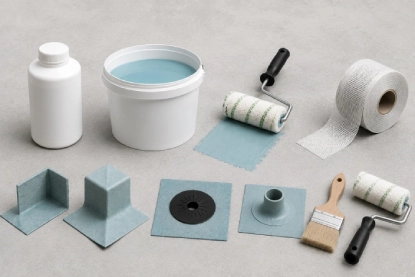
Modern bathroom design has shifted significantly toward high-end wet rooms and walk-in showers, making structural waterproofing a non-negotiable part of the construction process. A professional tanking kit is a comprehensive system of chemically compatible products designed to create a 100% watertight barrier behind tiles, preventing moisture from reaching sensitive substrates like plasterboard or timber. Without a dedicated shower kit, even the highest quality grout will eventually succumb to water vapour and capillary action, leading to structural rot and expensive repairs. This guide breaks down every component found inside a technical tanking system and explains why each element is vital for long-term structural integrity.
1.The Primer: Creating the Perfect Bond
The first component you will encounter in any high-quality tanking kit is the primer. Often overlooked, the primer is a liquid polymer solution that stabilizes the surface of the wall or floor. It penetrates deep into the pores of the substrate, whether it is new plasterboard, concrete or plywood.
The primary role of the primer is to regulate suction. If a waterproof membrane is applied to a dry, porous wall without a primer, the substrate will “suck” the moisture out of the membrane too quickly. This results in a weak chemical bond and may cause the waterproofing layer to peel away over time.
Key benefits of the included primer:
- Adhesion Promotion: It creates a “tacky” surface that allows the liquid membrane to bond at a molecular level.
- Dust Suppression: It binds any remaining microscopic dust particles that could interfere with the adhesive.
- Pore Sealing: It prevents air bubbles from rising out of the concrete and forming pinholes in your waterproof layer.
- Substrate Protection: It adds an initial layer of resistance against moisture for sensitive materials like gypsum.
2.The Liquid Waterproofing Membrane: The Core Barrier
The “hero” component of any shower kit is the liquid waterproofing membrane. This is usually a thick, paint-like substance made from advanced synthetic rubbers or modified acrylics. Unlike traditional bitumen, modern liquid membranes are solvent-free, odourless and safe for indoor use.
When applied, this liquid cures into a seamless, elastomeric skin. This means it is not just waterproof, but also flexible enough to move with the building. If a minor hairline crack forms in the wall due to natural settlement, the membrane will stretch to bridge the gap rather than snapping.
The performance of the liquid membrane is measured by its “dry film thickness.” Professionals must ensure they apply the correct amount—usually in two coats—to achieve the required millimetre thickness specified in technical data sheets. This monolithic layer is what ultimately prevents water from migrating through the walls and into the structure of the house.
3.Reinforcing Joint Tape: Protecting the Weak Points
Water is opportunistic; it will always find the easiest path to escape, which is almost always at the corners. The “wall-to-floor” and “wall-to-wall” junctions are the most high-risk areas in a shower because of structural movement. Every tanking kit includes a roll of specialised reinforcing tape to manage these stress points.
This tape is usually made from a non-woven polyester or a rubber-coated fabric. It is embedded into the wet first coat of the liquid membrane at every internal corner. This creates a reinforced “bridge” that can withstand the twisting and shearing forces that occur as a building settles.
Critical areas where reinforcing tape must be used:
- Internal Vertical Corners: Where two shower walls meet.
- Internal Horizontal Corners: The junction between the wall and the shower tray or floor.
- Board Joints: Anywhere two pieces of plasterboard or tile backer board meet.
- Floor Drains: Encircling the perimeter of the drainage outlet to prevent bypass.
4.Internal and External Pre-Moulded Corners
While joint tape can be folded into corners, professional-grade kits often include pre-moulded corner pieces. These are 90-degree components made from the same high-performance rubberised material as the tape. They are designed to eliminate the need for complex “origami” folding in tight spaces.
Using pre-moulded corners reduces the risk of human error during installation. In a wet room environment, a tiny gap in a folded corner is enough to cause a catastrophic leak over several years. These components ensure a uniform thickness and a perfect seal in the most difficult areas of the shower.
5.Pipe Sleeves (Gaskets): Sealing the Penetrations
The most frequently forgotten areas in DIY waterproofing are the pipe penetrations for the shower mixer and the showerhead. Every professional shower kit should include elasticated pipe sleeves or gaskets. These are square patches of waterproof material with a flexible, rubberised hole in the centre.
The sleeve is slid over the pipe and embedded into the liquid membrane on the wall. This creates a “gasket” seal around the pipe itself. Without this, water that gets behind the decorative chrome cover of a shower valve can leak directly into the wall cavity.
By using a dedicated pipe sleeve, you ensure that the waterproofing is continuous even where plumbing breaks through the surface. This “belt-and-braces” approach is what separates a professional installation from a standard one. It protects the timber studs or masonry from the internal dampness that often leads to mould and structural decay.
6.Application Tools: Brushes and Rollers
Most comprehensive tanking kits include the basic tools required for application, such as a high-density roller or a stiff-bristled brush. The choice of tool is important for achieving the correct texture and thickness. A roller is typically used for large, flat areas to ensure speed and even coverage.
A brush is essential for “cutting in” around corners and detailing the reinforcing tape. It allows the installer to “stipple” the liquid membrane into the mesh of the tape, ensuring it is fully saturated. Professional kits are designed so that the materials and tools work in harmony to prevent “skipping” or uneven spots.
7.The Power of the System: Why a Kit is Essential
One of the biggest mistakes in construction is mixing and matching products from different manufacturers. A tanking kit is engineered as a single chemical system. The primer is designed to bond to the membrane and the membrane is designed to bond to the reinforcing tape.
If you use a primer from one brand and a membrane from another, you risk a chemical incompatibility that could cause the system to fail. In the industry, this is known as “delamination.” When you buy a complete kit, you are buying a guarantee that every component has been laboratory-tested to work together.
Why a system-based kit is superior:
- Tested Compatibility: No risk of chemical reactions between layers.
- Single Warranty: One manufacturer covers the entire waterproof seal.
- Optimised Quantities: The kit contains the right amount of primer for the amount of membrane provided.
- Standard Compliance: Most kits are designed to meet specific UK building regulations (like BS 5385).
8.FIXA’s R&D: Engineering the Ultimate Shower Kit
At FIXA, we view wet room waterproofing as a critical engineering task. Our R&D team has focused on creating tanking kits that offer superior “wet-room security.” We utilize high-polymer membranes that offer extreme elasticity and high-tensile reinforcement components.
Our systems are designed for the UK’s unique construction materials, such as moisture-resistant plasterboard and timber joist floors. We prioritize ease of application without compromising on industrial-strength performance. When a contractor uses a FIXA kit, they are installing a chemical shield backed by decades of innovation.
We provide full technical documentation for every component in our kits. This ensures that architects and specifiers can be confident in the structural safety of their projects. Our goal is to provide a “fit and forget” solution that protects the building for its entire lifespan.
Don’t Compromise on the Invisible
The most important part of a bathroom is the part you can’t see. Tiles and grout are the decorative “skin,” but the tanking kit is the structural “shield.” Investing in a professional system ensures that your luxury bathroom doesn’t become a structural liability due to hidden water damage.
By understanding the role of each component—from the bonding primer to the detailing sleeves—installers can achieve a level of waterproofing that defies the aging effects of daily water exposure. At FIXA, we are dedicated to providing the high-tech chemicals that make these results possible. Protect your structure, protect your investment and always use a complete, integrated system for your next wet room project.
For more information and quotations, please contact us at +44 (0) 2081760680 or via email at info@fixaco.uk
Frequently Asked Questions (FAQ)
Can I tile directly onto the tanking membrane?
Yes, this is exactly what it is designed for. Once the membrane has fully cured (usually 24 hours), you can apply tile adhesive directly onto it. The textured surface of a high-quality membrane provides an excellent mechanical key for the adhesive.
How long does a tanking kit last?
When applied correctly, a professional tanking kit will last for the lifetime of the tiles. As long as the structural substrate doesn’t undergo massive failure, the chemical barrier remains inert and waterproof indefinitely.
Is one coat of membrane enough?
No, we always recommend a minimum of two coats. The first coat fills the pores and secures the tape, while the second coat provides the necessary thickness and ensures there are no “pinholes” or missed spots.
Can I use a tanking kit on a wooden floor?
Yes, but you must ensure the floor is rigid and free of excessive flex. We recommend using a high-quality tile backer board over the floor joists before applying the shower kit components.
Share!
Other Blog Posts
Other Blog Posts
Bitumen is one of the most important binding materials used […]
In modern structures, durability is becoming just as vital as […]
Modern bathroom design has shifted significantly toward high-end wet rooms […]
In the modern construction landscape, the demand for high-performance waterproofing […]

The window perimeter is one of the most technically demanding […]
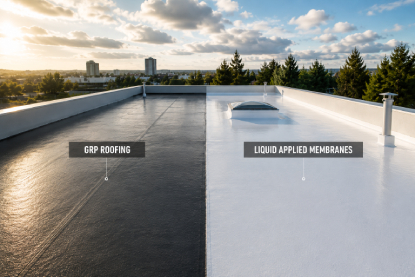
Choosing the right waterproofing system for a flat roof is […]
Flat roofs are a critical component of modern building design, […]
Epoxy-based reinforcement systems, when used in combination with carbon or […]

Digital transformation is a process in which companies respond to […]
