
FİXA Construction Chemicals at Every Stage of Construction

Today, the construction industry is no longer evaluated solely by the completion of a structure, but by ensuring that the structure is long-lasting, safe, sustainable, and aesthetically sound. At this point, selecting the right product at every stage is critical both for the technical success of the project and the return on investment. With its wide product range, FİXA Construction Chemicals provides reliable and innovative solutions at every stage of construction—from foundation to roof—and throughout the entire service life of a structure.

CONSTRUCTION STAGES WITH FİXA

1) Excavation Works

Excavation is one of the first steps in the construction process. This stage aims to create a stable platform on which the structure will safely rest and to prepare a solid foundation capable of securely transferring all superstructure loads to the ground.
Initially, the existing soil is excavated to the depth specified in the project, and the excavated material is removed from the construction site in accordance with occupational health and safety regulations.
During excavation, the physical and mechanical properties of the soil are taken into account; when necessary, engineering solutions such as piles, anchors, or soil improvement techniques are implemented to increase bearing capacity. These reinforcement measures ensure the long-term durability of the structure, particularly in weak, water-saturated, or heterogeneous soils.
After excavation is completed, the foundation-level ground surface is compacted using rollers or compactors to obtain a homogeneous and high-strength platform. This compaction process minimizes potential settlement or soil deformation in later stages.
At the base of the foundation excavation, a crushed stone layer is applied to prevent the blinding concrete from mixing with the natural soil. This layer functions as drainage and provides a smooth surface for waterproofing applications.
Foundation excavation is carried out approximately 1 meter wider on all sides than the building or foundation boundaries. This additional width facilitates ease of application and allows insulation, drainage, and formwork operations to be carried out comfortably along foundation edges. Additionally, excavation should be performed with sloped sides to ensure soil stability and protection against external effects.
To allow for the application of retaining wall waterproofing between the footing and the slope, a minimum working space of 600mm should be left. This space enables comfortable application while preserving the integrity of waterproofing materials.
When properly planned and executed, the excavation stage maximizes the performance of both the foundation system and subsequent waterproofing solutions.
At this stage, FİXA lays the foundation for long-lasting and reliable structures with its waterproofing systems, watertight concrete admixtures, and ground materials.
CONSTRUCTION STAGES WITH FİXA

2) Sub-Foundation and Foundation Works
Sub-foundation and foundation works are among the most critical stages, ensuring that the load-bearing system is safely seated on the ground and remains durable over time. The objective of this phase is to protect the structure against water, moisture, mechanical effects originating from the soil, to safely transfer loads, and to provide ease of installation for follow on trades.

Formation of the Drainage System
Based on soil investigation results, the drainage system is designed to discharge groundwater and surface water around the foundation before they reach the structure.
- Drainage prevents water infiltration and high groundwater levels from damaging the building’s structural system, waterproofing layers and infrastructure components. By reducing hydrostatic pressure on waterproofing surfaces, the system ensures long-term effectiveness of insulation and helps maintain a dry working environment for subsequent applications.
- This also helps keep the working area dry, thereby providing suitable conditions for subsequent waterproofing applications.
- However, drainage systems do not replace waterproofing and must always be used in combination with waterproofing solutions

Blinding Concrete Application
- After excavation and leveling, blinding concrete is poured over the foundation area. It prevents the mixing of soil with structural concrete and provides a clean, smooth, and solid surface for waterproofing applications, reinforcement installation, and formwork operations.
- Blinding concrete is essential for reinforcement cover placement, proper formwork installation and safe movement on site

Formation of Reinforcement and Commencement of Structural Waterproofing
The reinforcement system, which will undertake the primary load-bearing function of the foundation, is prepared in accordance with soil conditions and project design.
- A robust foundation structure is constructed to transfer the structural loads of the building to the ground. The type of foundation is determined based on the structural system and soil conditions.
- Reinforcement bars are placed in compliance with the structural (static) design, and the required tying and fixing operations are carried out.
- At this stage, sub-foundation waterproofing applications are installed. This waterproofing protects the foundation against groundwater and moisture whilst also preventing corrosion of the reinforcement steel.

Application of Crystalline Waterproofing Material as Dry Sprinkle
FİXA’s AQUAFİX Crystalline Waterproofing Material is applied over the raft reinforcement placed on the blinding concrete using the grid (karolaj) system.
- AQUAFIX is applied prior to the concrete casting at a rate of 3kg of powder per square meter.
- This powder penetrates deep into the concrete forming micro-crystalline structures when in contact with moisture to form insoluble minerals.
- These crystals fill the capillary pores of the concrete, preventing water penetration and transforming the concrete into a watertight barrier.
- Offering a superior alternative to conventional membranes, this system effectively prevents water damage and corrosion of reinforcement steel.
The sub-foundation and foundation stage ensures the long-term durability and safety of the structure through the coordinated implementation of drainage, blinding concrete, reinforcement installation, and capillary waterproofing applications.
FİXA’s waterproofing solutions technically strengthen this process and minimize potential risks that may be encountered in the subsequent stages of construction

Application of Waterproofing Admixture for Foundation and Shear Wall Concretes
As stated in Article 11/b of the Waterproofing Regulation, by applying the structural waterproofing method, a concrete admixture adjusted in accordance with the concrete mix design is added to the mixer at the construction site 20 minutes prior to the casting of foundation and shear wall concrete, thereby producing watertight concrete.


Waterproofing of Elevator Pits at the Lowest Level of Foundations
- Any water accumulated in the elevator pit should be removed by drainage or a submersible pump prior to application.
- The foundation concrete and the surrounding pit area should be cast simultaneously to prevent the formation of cold joints.
- The foundation and shear wall concrete to be poured into the elevator pit should be cast with the addition of AQUAFİX LIQUID Crystalline Capillary Waterproofing Concrete Admixture or AQUAFİX LIQUID C Concentrated Crystalline Capillary Waterproofing Concrete Admixture.
Use of Water-Swelling Tapes at Foundation–Shear Wall Joints and Cold Joints
- These are used to prevent water leakage at cold joints. These products are applied to structural joints and remain concealed within the concrete.
- Upon contact with water, they swell over a period of time, expand, and fill the pores and capillary voids within the concrete.
By creating resistance against water, they block moisture flow and prevent it from passing to the opposite side. - They are used to prevent water leakage at cold joints

Expansion Joint Applications in Foundation and Slab Areas
- These are high-elasticity sealing products used for the waterproofing of expansion (dilatation) joints.
- If the gap between two separate structures exceeds 30 mm, expansion (dilatation) tapes should be fixed to the reinforced concrete using high-adhesion adhesives (such as epoxy)

Preparation of Pile Heads for Waterproofing in Bored Pile Foundations
● In sub-foundation pile applications, pile concrete should be cast with the addition of AQUAFİX LIQUID Crystalline Capillary Waterproofing Concrete Admixture or AQUAFİX LIQUID C Concentrated Crystalline Capillary Waterproofing Concrete Admixture to protect against external water ingress.
● A formwork should be prepared around and above the pile head to create a smooth and even surface.
● A smooth surface should be formed by pouring non-shrink flowable grout and anchoring mortar into the prepared formwork. FİXA REPAIRGROUT GP Non-Shrink Flowable Grout and Anchoring Mortar group materials should be used.
● For the waterproofing of pile heads, brush-applied applications of AQUAFİX Crystalline Waterproofing Material and AQUAFİX S Sulfate-Resistant Crystalline Waterproofing Material should be applied to all surfaces.


CONSTRUCTION STAGES WITH FİXA

3) Structural Construction Stages
Structural construction is the most critical phase in which the building’s load-bearing framework is constructed and strength and stability are ensured. During this process, shear walls, columns, beams, and slabs are constructed, enabling the structure to safely transfer both vertical and horizontal loads to the ground. Structural construction provides a solid foundation for all subsequent finishing works and fit-out applications.

Construction of Shear Walls
After the foundation is completed, shear walls are constructed to resist lateral loads such as earthquakes and wind, and to transfer loads from slabs and beams to the ground.
Formwork Release Agent Application
Prior to shear wall construction, a release agent is applied to ensure easy removal of the formwork systems, improve the quality of the concrete surface, and allow the formwork to be reused. The type of formwork used in the project should always be confirmed.
This recommendation applies not only to basement shear walls but to all reinforced concrete constructions where formwork systems are used.
- The formwork release agent reduces unwanted voids and surface defects on the concrete surface and helps achieve a smooth finish.
- The application minimizes both labor time and material loss.

Application of Curing Compounds
✔ Curing compounds are applied during the formwork removal stage of basement shear walls.
✔ They prevent shrinkage cracks caused by rapid drying during the curing process, reduce surface dusting, and improve surface quality.


Required Surface Preparations Prior to Waterproofing
During or after the structural construction phase, surface preparation is required to eliminate defects formed in concrete elements to prepare surfaces for waterproofing applications. These include:
✔ Repair of segregated surfaces
✔ Repair of reinforcement corrosion
✔ Filling of tie-rod holes
✔ Repair of tie rods
✔ Repair of pipe penetrations
✔ Chamfering operations should be carried out using structural repair mortars included in FİXA’s product range. Crack repairs should be performed using non-structural repair mortars.

- Structural repair mortars have high adhesion capacity, allowing repair works to be carried out in a short time. They are used to restore the structural capacity of concrete elements. In such applications, R3 and R4 class structural repair mortars are preferred, as they are characterized by high bonding strength, high mechanical performance and rapid curing properties. Non-structural repair mortars are used for repairs related to the aesthetics of concrete elements and to provide additional protection against the attack of normal atmospheric agents (carbonation, chlorides). In these applications, R1 and R2 class repair mortars are used.

Repair and Waterproofing of Active Water Leakages
In situations where water is continuously flowing and does not allow waterproofing applications to be applied, rapid plugging materials should be used first, and waterproofing applications should be carried out afterward. AQUASTOP Rapid-Setting Powder Plugging Mortar is a suitable material for this purpose.


Waterproofing of the Soil-Contacting Sections of Shear Walls
Waterproofing of basement shear walls is a prerequisite for dry and healthy buildings. Wet basements occur as a result of water infiltration through cracks, porous areas, cold joints, or pipe penetrations in basement walls. Issues arising during concrete casting may also lead to water leakage (tie-rod holes, cold joints, segregated surfaces). Water infiltrating basement walls causes corrosion of reinforcement steel, thereby damaging the building’s load-bearing walls.

- Shear walls are structural elements that require waterproofing in both negative and positive directions in accordance with project requirements. The sections below ground level must be protected against groundwater and moisture..
- Crystalline group materials are used only on concrete surfaces. They are not applied on pumice block, brick, or aerated concrete surfaces.
- For crystalline materials applied from the negative side, plaster, render, and paint layers on the wall must be removed to expose the main reinforced concrete surface.
All brush-applied waterproofing systems must be applied in at least two coats, in perpendicular directions to each other. - FİXA offers a wide range of product options for shear wall waterproofing, suitable for both positive and negative side applications.


Use of Antifreeze Admixture in Concrete
To protect concrete against continuous freezing effects during cold weather, ANTIFREEZE 100 Concrete and Mortar Admixture, which provides resistance to freezing, should be used in all types of concrete production, including reinforced and unreinforced concrete, precast and prefabricated concrete castings, as well as ready-mix concrete produced with or without pumping.


Construction of Columns and Beams
After the shear walls are completed, columns and beams forming the main load-bearing system of the structure are constructed.
- Columns transfer vertical loads to the ground, while beams span openings and carry horizontal loads.
- These elements are of critical importance for structural integrity and seismic safety.
- Careful execution of column–beam joints during construction optimizes load transfer.
Construction of Slabs
After the beams are completed, slabs connecting the building floors are constructed.
- Slabs help transfer weight between floors and increase the strength of the building by acting as horizontal supports.”
- The type of slab to be used (waffle slab, ribbed slab, flat slab, etc.) is selected in accordance with the project design.
Facade, Wall, and Cladding Works
Interior and Exterior Wall Masonry Works: This includes applications such as brick, aerated concrete, pumice block, gypsum board, aluminum joinery, and similar systems. FİXA Aerated Concrete Masonry Adhesive and FİXA Pumice–Brick Masonry Mortar are used in all interior and exterior wall applications involving aerated concrete, lightweight aggregate block, and brick. In applications carried out with wall elements such as brick, aerated concrete, and lightweight aggregate block, polyurethane foam is used to fill small gaps remaining between the slab concrete or beams.


Sealing materials or adhesives are used in composite and curtain wall facades. In these architecturally and visually rich facade systems, details are completed using FİXA sealing materials.


Surface protection and water-repellent materials that provide protection without altering the appearance of exterior claddings, or forming a film layer, are used on moderately absorbent surfaces such as concrete and slate. On absorbent surfaces such as brick, aerated concrete, travertine, and natural stone, as well as in the protection and restoration of historical structures against weather conditions, these solvent-based materials penetrate beneath the surface after application and prevent rainwater from entering.
The silicone-based, colorless surface protection and water-repellent material AQUALON Colorless Surface Protector and Water Repellent is ideal for these applications

Roofing Works
Roof coverings can be made from various materials such as tiles, shingles, metal, and wood. In specific roofing details—around roof windows and roof access hatches – MS Polymer based waterproofing products are recommended for use both as primary waterproofing materials, as repair materials to eliminate leakages and as sealing materials at roof detail junctions.


On timber roofs with tile coverings, a cement-based adhesive mortar that is color-compatible with the tiles, long-lasting, and easily prepared by adding water is used for bonding ridge tiles. FİXA Ridge Tile Adhesive Mortar is available in red and anthracite color options.

Insulation and sealing materials used on metal roofs must be resistant to external influences and to the natural expansion and contraction caused by temperature variations. The insulation and sealing materials used on these roofs play a critical role in ensuring the functionality of metal roofs throughout their entire service life.
Sealing materials join the panels together and protect the underlying layer from external factors.
In the gutters of metal roofs, insulation materials compatible with the underlying layer material should be used.


MS Polymer based Liquid Membrane and POLYMERA MS FLUID – MS Polymer-Based Fluid Liquid Membrane, included in FİXA’s product range, are the preferred materials for metal roof rain gutters.
Terrace roofs are classified as non-accessible, accessible, and green roofs according to their intended use. Depending on these purposes, various waterproofing materials are used in accordance with the roof detail (type) determined by considering the roof slope and intended use.
FİXA’s product range offers waterproofing material options suitable for all types of terrace roofs.


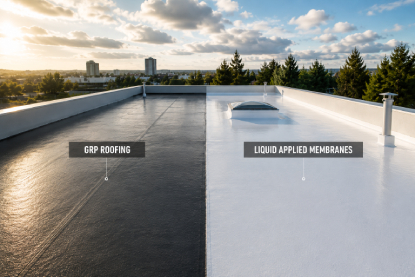
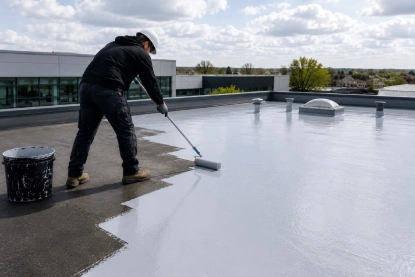
In the waterproofing of terrace roofs, polymer-modified bituminous membranes, plastic/rubber-based synthetic membranes and brush- or spray-applied materials are used. In the decision-making process for selecting the appropriate waterproofing material, the material should be chosen in accordance with the factors listed in the table below.

Waterproofing Material Selection Process
In terrace roofs, it is extremely important that point details at termination areas such as parapets and chimney bases, vertical upturns, and areas where the application surface is interrupted—such as drains, ventilation pipes, or expansion joints—are properly designed and installed with correct waterproofing in mind. Auxiliary products included in FİXA’s product range are used together with waterproofing materials in terrace roof waterproofing applications to ensure a watertight seal and long lasting performance.


CONSTRUCTION STAGES WITH FİXA

4) Finishing Works and Installation Stages of Construction
Finishing works are applications carried out after the completion of structural construction, providing the building with aesthetic value, user comfort and technical functionality. This stage determines the final appearance and performance of both interior spaces and exterior surfaces.
Plastering applications are the first works carried out when transitioning from structural construction to finishing works.

Execution of Plastering Works
Rough Plaster
Rough plaster is the first layer of plaster applied to wall surfaces to ensure they are smooth, durable and long-lasting. Rough plaster applications are carried out to protect walls from external factors such as rain, frost and sunlight, to prevent cracking and to achieve a level surface. At the same time, they contribute to thermal and acoustic insulation performance. Once surface smoothness is achieved, the quality of subsequent finishing and painting works improves and material consumption is reduced.
Rough plaster is the first layer of plaster applied to wall surfaces to ensure they are smooth, durable and long-lasting. Rough plaster applications are carried out to protect walls from external factors such as rain, frost and sunlight, to prevent cracking and to achieve a level surface. At the same time, they contribute to thermal and acoustic insulation performance. Once surface smoothness is achieved, the quality of subsequent finishing and painting works improves and material consumption is reduced.

Finishing Plaster
Finishing plaster is applied over rough plaster or concrete/raw concrete surfaces to achieve an exceptionally smooth finish. It ensures surface evenness before the installation of ceramic or decorative coverings, corrects minor surface imperfections, enhances aesthetic appearance and helps the finishing materials adhere more effectively.


Perlite Plaster
Perlite plaster is a lightweight plaster containing perlite aggregates, applied to walls and ceilings to improve thermal insulation, sound absorption, and fire resistance. It provides a smooth and durable surface while reducing the overall weight of the construction. Perlite plaster also enhances energy efficiency and contributes to a comfortable indoor environment..

Primers
Applying a primer on raw concrete surfaces before plastering enhances the performance of the application. It strengthens the adhesion of plaster mortars to the surface, reduces water loss and extends working time. Primers can be used on both interior and exterior surfaces, including vertical walls and ceilings.

Exterior Wall Insulation (Facade Insulation)
Facade insulation is applied to reduce a building’s heat loss, increase energy efficiency, and protect the exterior against climatic conditions.
Thermal insulation boards (EPS, XPS, or Rock Wool) are bonded and mechanically fastened to the facade, followed by a reinforced mesh plaster application, and finished with a decorative coating. In addition to saving energy, this system extends the building’s service life and enhances the aesthetic appearance of the exterior

STRAFIX Thermal Insulation Package
The STRAFIX Thermal Insulation Package is certified according to the TS EN 13499 system standard by TSE.
TS EN 13499 regulates and verifies the compatibility and performance of external wall insulation system materials made with EPS thermal insulation boards.

Execution of Electrical and Mechanical Installations
MS polymer-based adhesives provide excellent performance for the installation of all types of cabling, piping, panels, ventilation and heating/cooling units. They achieve superior results on surfaces such as concrete, stone, marble, ceramic, tiles, wood, glass, all types of metals, clay, brick, drywall, aerated concrete and combinations of these materials.


MS polymer-based adhesives are also used for bonding and jointing stainless steel, galvanized steel, or black (or untreated) steel, as well as for the manufacturing and installation of ventilation ducts and air conditioning systems.
Screed Applications
Screeds are applied over the structural concrete layer to correct surface imperfections and protect installation pipes.
- Conventional Cement-Based Screeds
- Composite and Self-Leveling Screeds
When conventional cement-based screeds are preferred, admixtures and additives are used to improve water resistance and workability of the floor screeds, thereby facilitating easier application


Composite and Self-Leveling Screeds
Composite and self-leveling screeds are used prior to floor covering applications to correct and even out surface irregularities. These screeds possess self-leveling and flow properties, allowing them to spread evenly and achieve a level surface.
Before applying floor materials such as screeds, a primer is used to increase adhesion and prevent dusting. When applied to absorbent surfaces prior to cement-based coatings, the primer reduces rapid water loss from the screed and prevents the formation of air bubbles.


If PVC flooring is to be installed on a self-leveling screed, general-purpose dispersion floor adhesives are used. These adhesives are designed for bonding PVC and linoleum floor coverings to pre-leveled surfaces, providing rapid and strong adhesion.
 Flooring Applications
When selecting floor coverings, factors such as the intensity of use, aesthetic expectations and ease of maintenance are taken into account.
Surface Hardening Floor Applications
One of the preferred methods for increasing the abrasion and impact resistance of concrete surfaces is the application of surface hardeners. Industrial service floors are expected to remain strong and durable under heavy static and dynamic loads, impacts, bending and fatigue. Surface hardening materials are cement-based coatings applied monolithically over fresh concrete.
The concrete on which surface hardening materials will be applied should be reinforced with steel mesh, steel wire or polypropylene fibers to prevent cracking under load.
In surface hardening floor applications, Crack inducement joints should be cut to a depth of ¼ of the concrete thickness. After cutting the joints, they are filled with a flexible material.


Parking and floor paint are recommended for use in parking lots, highways (light traffic), pedestrian pathways, and curb painting, as well as in factory floors where high chemical resistance is not required, sports and recreational fields, and areas such as hotels, laundries and service zones.

Epoxy Floor Coatings
Epoxy floor coatings are applied to concrete floors to provide a durable, smooth and decorative surface capable of withstanding heavy loads over long periods. They are frequently used as a flooring system to achieve decorative continuity. With their flat, smooth and glossy – or textured finish they have become an essential component of architectural designs.


Polyurethane Floor Coatings
Polyurethane floor coating materials are preferred in playgrounds and around swimming pools due to their hygienic and slip-resistant properties.

Ceramic Floor Coverings
Ceramic adhesives are designed to provide a strong bond for small, medium and large-sized covering materials, including ceramics, granite, porcelain and natural stone, meeting the requirements of all types of projects (residential, industrial buildings, shopping malls, healthcare facilities, educational buildings, etc.).

According to TS EN 12004-1, ceramic adhesives are classified into three main categories based on their chemical composition and technical performance in tests:


According to TS EN 12004-1, ceramic adhesives are divided into two main categories based on the results of standard-compliant strength tests:

According to TS EN 12004-1, ceramic adhesives are divided into two groups based on their flexibility class:

Criteria for Selecting Ceramic Adhesives
The following factors should be considered when selecting a ceramic adhesive:
- Surface absorbency of the covering material (water absorption percentage)
- Surface absorbency of the substrate (water absorption percentage)
- Flexibility of the substrate
- Size and weight of the covering material
- Color of the covering material
- Application area
- Use in outdoor environments (e.g., open terraces, balconies, exterior walls)
- Areas exposed to constant water (e.g., swimming pools and water tanks)
- Ceramic applications on underfloor heating systems
- Time required before opening the area to use
FİXA offers a wide range of ceramic adhesives that vary according to the application area.

When ceramics are to be installed over existing ceramic, a primer is used on vertical, glossy surfaces or before applying ceramic over ceramic to increase adhesion and balance the surface absorbency.


Grout Applications
When selecting grout materials, the TS EN 13888 standard is an important criterion. According to TS EN 13888, grout materials are classified into different categories based on their technical test
The TS EN 13888 standard classifies grout materials into two main categories based on the results of standard-compliant strength tests:

The TS EN 13888 standard defines two additional properties that grout materials may possess:

IZO-CERA is used as a colorless surface protector and water repellent to provide water resistance in the intermediate joints of covering materials such as ceramic, tiles, and glass mosaics.


CONSTRUCTION STAGES WITH FİXA

5) Construction Stages for Outdoor Areas
After the building is completed, landscaping and exterior works are carried out. This stage ensures that the structure is completed functionally, safely and aesthetically.
Site Concrete, Asphalt, or Other Surface Coverings
Site concrete or asphalt pavements are applied in areas such as vehicle roads, parking lots and pedestrian pathways.
- Surface strength, abrasion resistance and adaptability to weather conditions are important.
- In industrial areas flooring systems resistant to high mechanical loads are preferred.

Underground Piping and Manhole Placement
Storm water, waste water and drainage lines are installed and organized. Pipe routes, slopes and connection points must be executed according to the project specifications. Manhole covers should be positioned correctly to ensure ease of maintenance and safety.
Garden, Perimeter Wall and Railing Fabrication
For safety and aesthetic purposes, garden walls, fences and railings are constructed. The materials used must be both durable and compatible with the architectural design.
High-strength, general-purpose chemical anchors are used in a wide range of applications including: building reinforcements, planting and assembly works, installation of aluminum and stainless-steel railings, shutter installation, mailbox installation, lighting system installation, mounting of machinery to floors and walls, satellite dishes, TV transmitters, radiator installation, hanging of advertising panels, cable fastening on ceilings and walls, door installation, handrail installation, grill installation, as well as installation of awnings, sunshades and road signs.


CONSTRUCTION STAGES WITH FİXA

6) Project Handover in Construction
The handover stage in construction is the final process that verifies the project has been completed without deficiencies in terms of technical quality, aesthetics and safety. This stage is not merely a formality; it encompasses the final inspections and improvements to ensure that the structure can be used safely and reliably for many years. sealant and Technical Adhesives usage Areas :

Final Inspections
- Structural Inspections: Load-bearing systems, reinforced concrete elements, steel fabrications and connection points are examined.
- Waterproofing and Seal Tests: Basement, foundation, retaining wall, façade and roof waterproofing are tested. Any water leakage, joint gaps or coating defects are immediately repaired.
- Surface Inspections: Plaster, paint, coverings, grout and sealant applications are checked for cracks, bubbling or color inconsistencies.
Testing of Installations
- Electrical Installations: Energy panels, outlets, switches, lighting and power lines are tested. The operation of residual current devices (RCDs) and circuit breakers is checked.
- Mechanical Installations: Clean water, wastewater, heating-cooling, ventilation and fire protection systems undergo pressure tests.
- Gas Installations: Gas tightness tests are conducted and the safe operation of valves is verified.
Cleaning and Preparation for Use
- Post-Construction Cleaning: All areas undergo rough and fine cleaning. Dust, mortar residues and protective coverings are removed.
- Protective Coatings: Temporary protective coverings on delicate surfaces (glass, marble, parquet) are removed to prevent scratches and stains.
STRENGTHENING APPLICATIONS IN EXISTING BUILDINGS:
Reinforcement of Structures that Have Reached the End of Their Service Life
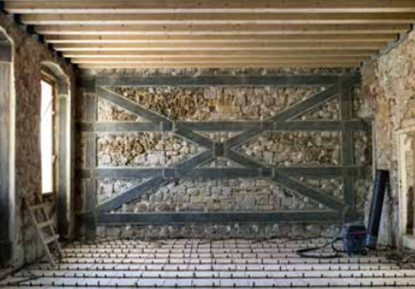
This is an engineering process involving a series of construction methods applied to an existing structure to increase its resistance to natural disasters such as earthquakes, floods and wind, and to extend its service life. This process is particularly used for strengthening older or structurally weak buildings located in high seismic risk areas.

Building reinforcement is carried out to increase the structural durability, ensuring the safety of occupants and minimizing financial losses..

Permanent Durability and Quality Throughout a Building’s Service Life
Every construction project is valuable not only at the handover stage but also throughout its lifespan, providing long-term performance and reliability long after completion. Therefore, selecting the right product at each stage is one of the most critical factors determining the quality of the project.
FİXA aligns on-site applications with technical standards through its “right product – right stage – right application” approach, preventing potential errors from the outset and minimizing maintenance costs. This ensures that the building achieves durability and functionality beyond its planned service life.
FİXA positions itself in the construction sector not merely as a material supplier but as a strategic project partner. Its product portfolio, developed considering engineering calculations, ground conditions, climatic factors and usage scenarios, provides tailored solutions for every application point—from foundation to roof. This approach reduces the workload of construction companies and delivers a long-lasting, safe and aesthetically pleasing living space for the end user.

From structural reinforcement to waterproofing, from façade claddings to flooring systems and from interior finishes to outdoor landscaping, FİXA adds value to projects with high-performance, eco-friendly and sustainable materials. Its low-VOC products are designed with both environmental impact and applicator health in mind, ensuring compliance with modern green building standards.
The added value provided by FİXA is not limited to product quality alone. Through planning, technical consulting, application support and long-term performance guarantees, FİXA acts as a reliable partner at every stage of a project. This holistic approach preserves the value of the investment, maximizes user satisfaction and ensures that buildings remain safe, aesthetically pleasing and sustainable for many years.
For detailed information and quotations, you can contact us by phone at +44(0)20 8176 0680 or by email at info@fixaco.uk
Share!
Other Blog Posts
Other Blog Posts
Bitumen is one of the most important binding materials used […]
In modern structures, durability is becoming just as vital as […]
Modern bathroom design has shifted significantly toward high-end wet rooms […]
In the modern construction landscape, the demand for high-performance waterproofing […]

The window perimeter is one of the most technically demanding […]
Choosing the right waterproofing system for a flat roof is […]
Flat roofs are a critical component of modern building design, […]
Epoxy-based reinforcement systems, when used in combination with carbon or […]

Digital transformation is a process in which companies respond to […]