
How to Fix Flat Roof Leaks Instantly with a High-Performance Roof Seal?
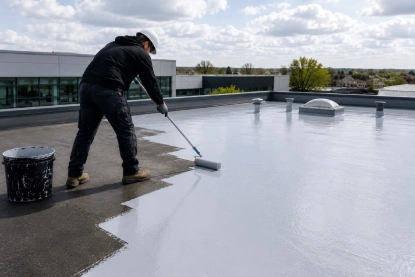
Flat roofs are a critical component of modern building design, but their susceptibility to ponding water and seam failure makes them a constant concern for property managers. When a leak occurs, the damage to the interior and the underlying structure can escalate within hours, making an immediate intervention necessary. A high-performance roof seal utilizing liquid-applied technology offers a “surgical” repair method that stops water ingress instantly without the need for a total roof replacement. By creating a seamless, monolithic barrier, these advanced chemicals provide a long-term solution that handles the unique thermal and structural stresses of flat roofing systems.
1. The Immediate Threat: Why Flat Roofs Fail
The primary reason flat roofs develop leaks is not usually the material itself, but the failure of the mechanical joints or “seams.” Traditional systems like bitumen felt or EPDM sheets rely on adhesives or heat-welding to join separate sections together. Over time, constant exposure to UV radiation and thermal expansion causes these joints to pull apart, creating microscopic pathways for water.
Once water enters through a compromised seam, it often travels horizontally along the roof deck, making the internal leak point different from the external entry point. This “migration” of water can lead to hidden rot in timber joists or corrosion in steel decking. A high-performance roof seal addresses this by providing a liquid-fit solution that effectively erases these vulnerable joints.
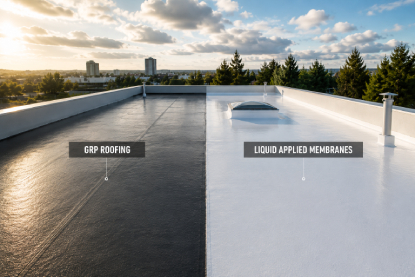
Modern buildings also suffer from “thermal shock,” where a roof can heat up to 80°C in the sun and then cool rapidly during a sudden UK rainstorm. Brittle materials like old GRP or aged felt cannot handle this rapid contraction and will develop hairline fractures. A liquid rubberised seal is engineered specifically to remain supple during these temperature swings, preventing cracks before they start.
2. Defining High-Performance: What is a Professional Roof Seal?
In the construction industry, a high-performance roof seal is more than just a thick paint; it is a Liquid Applied Membrane (LAM) engineered from synthetic rubber compounds. These products, often based on high-grade polyurethanes or EPDM-style polymers, are designed to cure into a heavy-duty, elastic skin. This skin is 100% waterproof and remains flexible even in sub-zero temperatures.
The core characteristics of a professional-grade seal include:
- High Elongation: The ability to stretch over 500% and return to its original shape without tearing.
- Hydrophobic Chemistry: The material repels water on contact and can withstand standing (ponding) water indefinitely.
- Molecular Bonding: It doesn’t just sit on the surface; it penetrates the pores of the substrate to create a permanent chemical anchor.
- UV Stability: Advanced stabilizers prevent the sun from turning the rubber brittle or “chalky” over time.
- Cold-Applied Safety: It requires no open flames or gas torches, making it safer for use on occupied buildings.
3. Substrate Versatility: Where Can You Apply a Roof Seal?
One of the most valuable aspects of a high-tech roof seal is its ability to bond to almost any common roofing material. This versatility allows contractors to use a single system for diverse projects, from industrial warehouses to residential extensions. Instead of stripping away the old roof, the liquid can often be used to “recover” the existing surface.
Substrates compatible with FIXA high-performance seals:
- Aged Bitumen and Felt: Rejuvenates brittle surfaces and bridges old cracks.
- Metal (Galvanized and CGI): Provides a rust-inhibitive seal that handles the high expansion rates of metal sheets.
- Concrete and Masonry: Fills microscopic fissures and prevents water from reaching the reinforcement steel.
- GRP (Fibreglass): Repairs the common “star-cracks” and delamination issues found in older GRP roofs.
- Timber and OSB3: Creates a flexible, waterproof layer for new builds or extensions.
4. The Science of Seamless Detailing
Detailing is the process of sealing penetrations like skylights, chimneys and vent pipes, which are the most common sites for leaks. In a traditional sheet-based roof, these areas require complex cutting and multiple layers of flashing tape. A high-performance liquid roof seal simplifies this by allowing the roofer to “paint” the protection directly onto the vertical and horizontal surfaces.
Because the material is applied as a fluid, it flows into tight corners and around bolts that are impossible to seal with rigid sheets. This creates a “self-flashing” monolithic bond that eliminates the need for separate metal trims. The result is a continuous, unbroken shield that treats every architectural detail as a single, watertight unit.
This seamless nature is particularly important for commercial roofs with high HVAC traffic. Every pipe penetration is a potential failure point, but with a liquid seal, the protection is integrated into the main roof body. This significantly reduces the long-term maintenance burden and ensures that the most vulnerable parts of the structure remain dry.
5. Step-by-Step Guide: Fixing a Leak Instantly
To achieve a 20-year lifespan with a roof seal, the application must follow a systematic approach. While the material is easy to use, the preparation phase is the foundation of a successful repair. Even the most advanced chemicals cannot bond to dirt, moss or loose debris.
The 3-Step System for a Professional Fix:
Step 1: Clean and Prepare: Use a stiff brush or power washer to remove all contaminants and moss. Ensure any major structural damage is repaired and the surface is dry and free of frost.
Step 2: Detailing and Reinforcement: Apply the seal around all joints, seams and penetrations first. For maximum strength, embed a polyester reinforcement mesh into the wet first coat to bridge potential movement points.
Step 3: Full Coat Application: Once the details are secure, apply the main coats across the entire roof surface using a roller or airless spray. Always apply two perpendicular coats to ensure uniform thickness and eliminate “pinholes.”
6. Economic and Environmental Sustainability
Restoring a roof with a high-performance roof seal is a strategic economic decision that aligns with modern sustainability goals. A total “strip and replace” operation is not only expensive but also generates massive amounts of landfill waste. By using a liquid recovery system, you are essentially upcycling the existing roof structure.
The labour savings are also substantial, as there is no disruptive demolition phase. Occupants can continue to use the building without the noise and debris associated with a traditional tear-off. Furthermore, light-coloured seals provide energy-efficient “Cool Roof” benefits by reflecting solar heat. This reduces internal temperatures and can lower summer cooling costs by up to 20%.
Investing in a high-quality seal resets the “roofing clock” of the building. Instead of a temporary patch that fails in two years, a professional liquid membrane provides a 15 to 25-year service life. This long-term durability results in a much lower “total cost of ownership” compared to cheap, temporary sealants.
7. Performance Under Extreme Conditions
A high-performance roof seal must be able to withstand the harshest environmental challenges. Unlike standard decorative coatings, FIXA’s technical seals are engineered for permanent water immersion. This is critical for flat roofs with poor drainage where “ponding water” can sit for weeks during a typical UK winter.
The UV resistance of these systems is also paramount. Solar energy is the primary cause of roof degradation, as it breaks down the polymer chains in bitumen and plastic. A professional seal contains high-grade UV stabilizers that prevent the material from becoming brittle. This ensures the roof stays elastic and “rubbery” for its entire life cycle.
Chemical resistance is another often-overlooked factor. In industrial areas, roofs are often exposed to airborne pollutants and acid rain. A high-performance liquid membrane is chemically inert once cured, protecting the building from environmental corrosion. This level of resilience is why liquid-applied systems are the preferred choice for critical infrastructure projects.
8. Why FIXA R&D Leads the UK Market?
At FIXA, we view every roof as a unique engineering challenge. Our research and development team focuses on creating roof seal formulations that balance ease of application with industrial-grade performance. We prioritize low-VOC and solvent-free products to ensure they are safe for the environment and the applicator.
Our systems are tested for extreme adhesion and peel strength on a wide variety of substrates. We provide the technical documentation and field support required to ensure every installation meets national building standards. When you choose FIXA, you are choosing a system backed by over two decades of chemical innovation.
We understand that a roof leak is more than just a nuisance—it is a risk to your asset’s value. By combining advanced polymer science with practical field experience, we ensure that your structure remains watertight, no matter what the weather brings.
The Smart Solution for Flat Roof Maintenance
The evolution of liquid-applied technology has transformed how we approach flat roof repair and restoration. Relying on temporary patches or expensive replacements is no longer necessary when a high-performance roof seal can provide a permanent, seamless solution. By embracing these advanced construction chemicals, you are protecting the structural integrity of your building and ensuring long-term peace of mind.
At FIXA, we are dedicated to providing the high-tech materials and technical expertise required for these superior results. Whether you are dealing with a small residential leak or a massive industrial restoration, our range of professional seals offers the most versatile and reliable tools in the industry. Don’t let a leak compromise your structure; choose a professional seal and secure your roof for the decades to come.
For more information and quotations, please contact us at +44 (0) 2081760680 or via email at info@fixaco.uk
Frequently Asked Questions (FAQ)
Can I apply a roof seal over damp surfaces?
While a dry surface is always ideal for maximum adhesion, some specialized FIXA moisture-tolerant systems can be applied to slightly damp substrates. However, there must be no standing water or active rain during the initial application.
How long does the seal take to become waterproof?
Most of our high-performance systems become “showerproof” within 30 to 60 minutes. This rapid-cure technology is essential for working in the unpredictable UK climate where rain windows can be very narrow.
Is a primer always necessary?
For porous surfaces like concrete or very old, weathered bitumen, a primer is essential to seal the substrate. This prevents the liquid rubber from being absorbed too deeply, ensuring the final membrane has the correct dry film thickness.
Can I walk on the roof once it is sealed?
Yes. Once fully cured, our liquid membranes are designed to handle occasional foot traffic for maintenance. For high-traffic areas like balconies or walkways, we recommend a reinforced system with a quartz anti-slip finish.
How long will a professional roof seal last?
When applied correctly as a full restoration system with a reinforcement mesh, you can expect a service life of 20 to 25 years. A simple “top-up” coat after two decades can extend this lifespan even further.
Share!
Other Blog Posts
Other Blog Posts
Bitumen is one of the most important binding materials used […]

In modern structures, durability is becoming just as vital as […]
Modern bathroom design has shifted significantly toward high-end wet rooms […]
In the modern construction landscape, the demand for high-performance waterproofing […]

The window perimeter is one of the most technically demanding […]
Choosing the right waterproofing system for a flat roof is […]
Flat roofs are a critical component of modern building design, […]
Epoxy-based reinforcement systems, when used in combination with carbon or […]

Digital transformation is a process in which companies respond to […]
