
GRP Roofing vs. Liquid Applied Membranes: Which is Better for Flat Roofs?
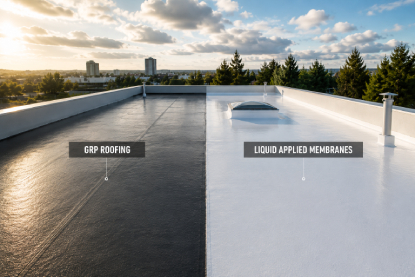
Choosing the right waterproofing system for a flat roof is a critical decision that determines the structural longevity and maintenance costs of a building for decades. In the UK market, the debate often settles between the traditional, rigid protection of GRP roofing (Glass Reinforced Polyester) and the modern, high-tech versatility of Liquid Applied Membranes (LAM). While GRP has been a popular choice for its tough finish, advancements in polymer chemistry have made liquid membranes the superior choice for handling building movement and complex detailing. This guide provides a deep technical comparison to help you decide which system best fits your project’s structural requirements.
1. What is GRP Roofing? (The Rigid Shield)
GRP roofing, commonly known as fiberglass, is a composite material formed by strengthening plastic with fine fibres of glass. In a roofing context, it involves laying a glass fibre mat over a brand-new timber deck (usually OSB3 boards), saturating it with polyester resin, and finishing it with a pigmented topcoat.
Key Characteristics of GRP:
- Surface Hardness: Once cured, GRP is extremely tough. It is resistant to fire, heavy foot traffic, and impact, making it popular for balconies.
- Aesthetics: The topcoat can be produced in almost any colour, providing a clean and modern look.
- Rigid Structure: It creates a “hard shell” over the roof.
The Major Downside:
The primary weakness of GRP is its lack of flexibility. Because it is a thermosetting plastic, it cures into a brittle state. Buildings are not static; they settle, expand in heat and contract in the cold. A rigid GRP system cannot absorb this movement, which often leads to the “cracking” sounds homeowners report in summer and, eventually, structural fractures.
2. Defining Liquid Applied Membranes (LAM)
Liquid Applied Membranes (LAMs) represent the pinnacle of modern waterproofing science. These systems—typically based on Polyurethane (PU), MS-Polymers, or PMMA—are cold-applied liquids that cure into a monolithic, rubber-like skin.
Why LAM is Different:
Unlike GRP, an LAM is an elastomeric system. It doesn’t just sit on top of the roof; it bonds at a molecular level to the substrate. Whether the roof is concrete, old felt, metal, or timber, the liquid flows into every microscopic pore to create a permanent, vacuum-sealed bond.
The “Seamless” Advantage:
In the roofing industry, the most common failure point is the seam. GRP uses separate trims and joints that must be glassed over manually. LAMs eliminate this risk entirely. The entire roof becomes one single, seamless piece of rubberized shield with no joints, no laps, and no weak points.
3. The Flexibility Factor: Handling Thermal Shock
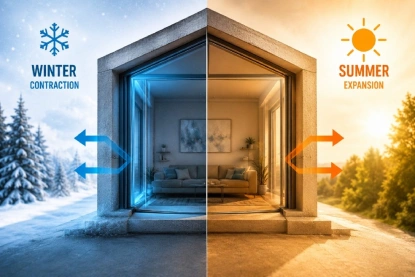
In the UK, roofs are subject to “thermal shock”—rapid changes in temperature that cause materials to expand and contract. This is where the technical superiority of Liquid Applied Membranes becomes evident.
GRP Elongation: GRP has almost zero elongation. When the timber deck underneath moves even a millimetre, the GRP is under immense stress. This is why GRP roofs often fail at the perimeter where the roof meets the wall.
LAM Elongation: High-quality liquid membranes, such as FIXA’s PU systems, can offer elongation rates of 400% to 600%. This means the membrane can stretch significantly and return to its original shape without tearing or delaminating.
Technical Tip: Always check the “Modulus of Elasticity” in the technical data sheet. A lower modulus combined with high elongation is the “sweet spot” for long-term flat roof success.
4.Installation Comparison: Complexity and Risk
The GRP Installation Hurdles:
- Deck Replacement: GRP must be applied to a brand-new, bone-dry OSB3 deck. You cannot overlay it on old felt. This adds significant cost, time and waste to the project.
- Weather Sensitivity: You cannot install GRP if there is even a hint of moisture. Rain during the resin stage will ruin the chemical bond, leading to “fish-eye” bubbles.
- Catalyst Mixing: The installer must manually add a catalyst to the resin based on the temperature. If they add too much or too little, the roof will either be too brittle or fail to cure, leading to a “tacky” roof that attracts dirt and eventually leaks.
The LAM Installation Benefits:
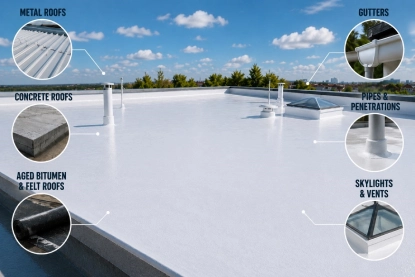
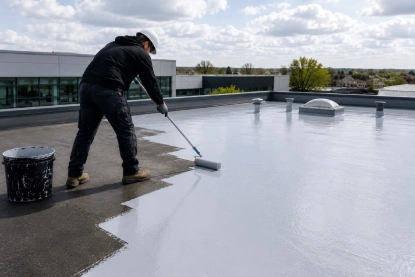
- Overlay Capability: LAMs are the kings of restoration. They can be applied directly over old bitumen, concrete or metal (provided the surface is sound and primed). This saves thousands in strip-out costs.
- Safety: LAMs are cold-applied. There is no need for gas torches, reducing fire risk on-site.
- Detailing: For pipes, skylights and vents, you simply “paint” the membrane up the side. There is no need for complex plastic trims or awkward glassing in tight corners.
5. Complex Detailing: Trims vs. Self-Flashing
One of the most tedious parts of GRP roofing is the requirement for pre-formed GRP trims. These are used for edges, corners and upstands.
- The Problem: Every time a trim meets the main roof, a joint is created. The installer must “bandage” this joint with extra matting and resin. If this bandage fails due to building movement, a leak is inevitable.
- Liquid Applied Membranes are “self-flashing.” The liquid is the flashing.
- The Solution: You roll the liquid onto the flat area and continue it up the wall or around a pipe. Because it’s a single liquid application, there is no joint between the flat area and the vertical area. It is one continuous, unbroken seal.
6. UV Resistance and Aging: The “Alligatoring” Effect
UV radiation from the sun is the primary cause of roof degradation.
- GRP Aging: Over 10-15 years, the topcoat of a GRP roof can become brittle and “chalky.” This leads to “star cracking” or “alligatoring”—a pattern of cracks that look like alligator skin. Once these cracks appear, water can reach the glass fibres and “wick” moisture deep into the roof.
- LAM Aging: Modern liquid membranes are engineered with high-grade UV stabilisers. They remain supple and flexible for their entire lifespan (often 20-25 years). They do not “chalk” or crack because the polymer chains are designed to withstand solar energy without breaking down.
7. Sustainability and The Circular Economy
In modern construction, we must prioritize materials that reduce waste.
- GRP: Since it usually requires a total tear-off of the old roof, it generates massive amounts of landfill waste (old felt, old timber, insulation).
- LAM: By choosing a liquid recovery system, you are essentially “upcycling” the existing roof. You prevent tonnes of waste from going to the landfill and extend the life of the existing structural components.
FIXA’s Commitment: Our liquid systems are designed with low-VOC (Volatile Organic Compound) formulations, ensuring they are safer for the environment and the people living under the roof.
8. Financial Analysis: Short-Term vs. Long-Term Cost
At first glance, GRP might seem comparable in price to a high-end Liquid Membrane. However, the Total Cost of Ownership tells a different story:
While the raw chemicals for an LAM might be more expensive, the lack of a mandatory new deck and the speed of installation make it the more economical choice over a 20-year period.
Why the Future is Liquid
The era of rigid, brittle roofing systems is slowly coming to an end. While GRP roofing still has its place in specific high-impact balcony applications, the overall benefits of Liquid Applied Membranes—flexibility, seamlessness and ease of detailing—make them the superior choice for the vast majority of flat roofs.
By choosing a liquid system, you are investing in a “living” membrane that works with your building rather than against it. You are choosing a solution that is faster to install, easier to maintain, and significantly more sustainable.
At FIXA, we take pride in our R&D-driven approach to waterproofing. Our liquid systems are engineered for the toughest climates, ensuring that your structure remains watertight, energy-efficient, and secure for decades.
Ready to upgrade your roofing specification? Contact the FIXA technical team today for a bespoke project assessment and discover why liquid technology is the ultimate defense for your flat roof.
For more information and quotations, please contact us at +44 (0) 2081760680 or via email at info@fixaco.uk
Frequently Asked Questions (FAQ)
Can I walk on a Liquid Applied Membrane?
Yes. While GRP is famous for its hardness, FIXA produces specific “trafficable” liquid membranes that are reinforced with quartz or sand for non-slip walkways.
Why does my GRP roof make a “popping” or “cracking” noise?
This is thermal expansion. Because the GRP is too rigid to move with the timber deck, it “snaps” against the fixings as it heats up. This is a sign of stress that can lead to leaks. LAMs are silent because they move with the building.
Is a primer always necessary for Liquid Membranes?
On porous surfaces like concrete or aged bitumen, yes. The primer ensures the liquid rubber doesn’t soak into the substrate, allowing the main membrane to maintain its required thickness.
How do I repair a hole in the roof?
Repairing GRP is difficult because new resin doesn’t always bond well to old, sun-baked GRP. Repairing an LAM is simple: clean the area and apply a new layer of liquid. It will chemically fuse with the original layer.
Share!
Other Blog Posts
Other Blog Posts
Bitumen is one of the most important binding materials used […]
In modern structures, durability is becoming just as vital as […]
Modern bathroom design has shifted significantly toward high-end wet rooms […]
In the modern construction landscape, the demand for high-performance waterproofing […]
The window perimeter is one of the most technically demanding […]
Choosing the right waterproofing system for a flat roof is […]
Flat roofs are a critical component of modern building design, […]
Epoxy-based reinforcement systems, when used in combination with carbon or […]

Digital transformation is a process in which companies respond to […]
