
Self-Levelling Compounds: The Smart Technology Behind Flawless Floors
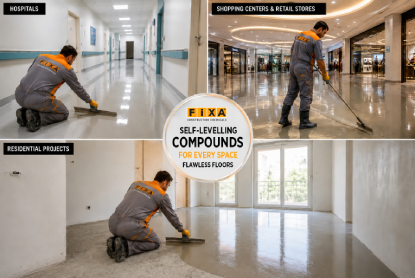
In modern structures, durability is becoming just as vital as aesthetics and application quality is just as crucial as speed. Especially in flooring systems, even minor errors can escalate into major structural problems over time. Cracks in ceramics, a hollow feel under parquet floors, surface irregularity in PVC coatings, or visual defects on epoxy surfaces are often caused by an insufficiently smooth subfloors. This is precisely where self-levelling compounds come into play.
With the advancement of construction technologies, traditional methods are being replaced by faster, more precise and higher-performance systems. Self-levelling compounds have become one of the most critical construction chemicals in this transformation. Today, they are widely used in a vast range of projects—from hospitals and shopping malls to hotels and residential buildings—due to their ability to accelerate programs and enhance the final coating performance, especially where high quality surface finishes are required.
What is a Self-Levelling Compound?
Self-levelling compounds are specialized construction chemicals used to eliminate defects on concrete or rough compound surfaces, smooth out the substrate and prepare a subfloor so that it is suitable for the final top floor covering application.
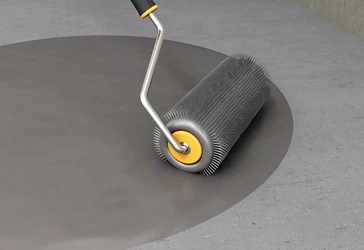
While surface levelling operations using traditional smoothing compound applications require intensive labor, the process progresses much more controllably and rapidly with self-levelling systems. This both reduces labor costs and ensures a higher quality surface finish.
Why is Self-Levelling Compound Used in Modern Structures?
Today’s floor covering systems are manufactured with much tighter tolerances. Applications such as large-format ceramic tiles, PVC and vinyl floor coverings, epoxy flooring systems, and laminate or engineered parquet can suffer significant performance losses on uneven surfaces. Even minor level discrepancies in the floor can lead to coating failures, breakage, or aesthetic flaws over time.
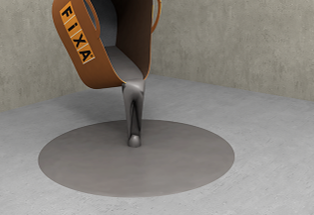
In professional projects, the use of self-levelling compounds is no longer seen merely as a preference, but as a technical necessity.
What is Inside Self-Levelling Compound?
Self-levelling compounds are formulated with specialized components to deliver high performance. They consist of cement or calcium sulfate-based binders, specific granulometric aggregates, polymer additives, super plasticizing chemicals, and setting regulators. Some advanced products also feature fiber reinforcements and water-repellent additives.
Thanks to these specialized ingredients, the product does not merely become fluid; it also ensures high adhesion, low shrinkage, superior durability, and long-lasting performance. The polymer technologies utilized in modern construction chemicals maximize surface resistance while minimizing micro-crack formation.
Where are Self-Levelling Compounds Used?
Self-levelling compounds are utilized in many different structures where surface smoothness is of critical importance. They create a seamless substrate under hygienic PVC coatings in hospitals and ensure the surface is resistant to heavy foot traffic in hotels and shopping malls.
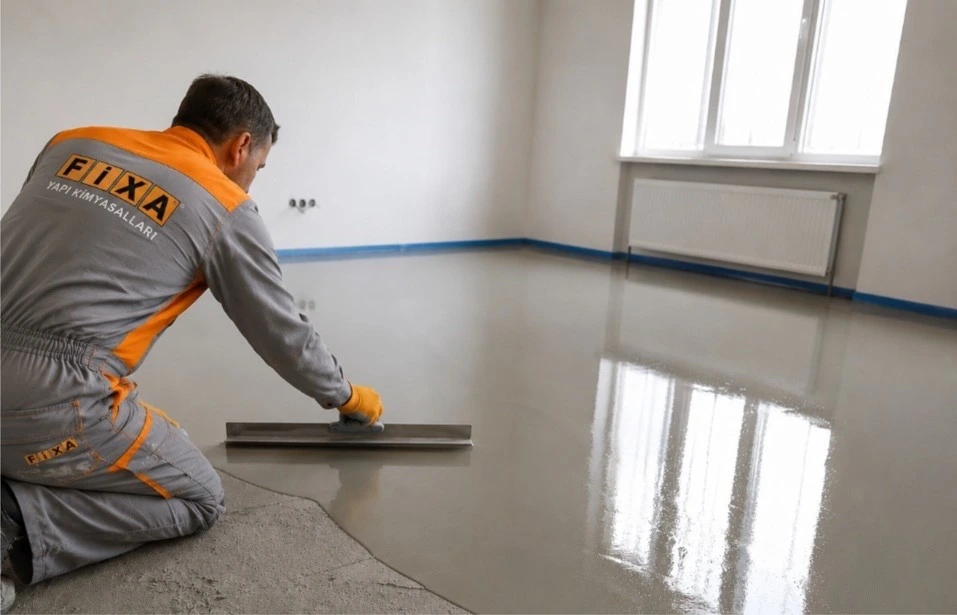
Contributing to a premium look for parquet, ceramic and carpet installations in residential and office projects, these systems also offer durable and long-lasting flooring solutions for educational institutions.
What to Consider in Professional Applications
Selecting a high-quality product alone is not enough for self-levelling compound applications; the application conditions also play a massive role. The substrate must be structurally sound, clean, and entirely free of dust. Furthermore, applying an appropriate primer is critical to balance the absorption of the substrate and enhance adhesion strength.
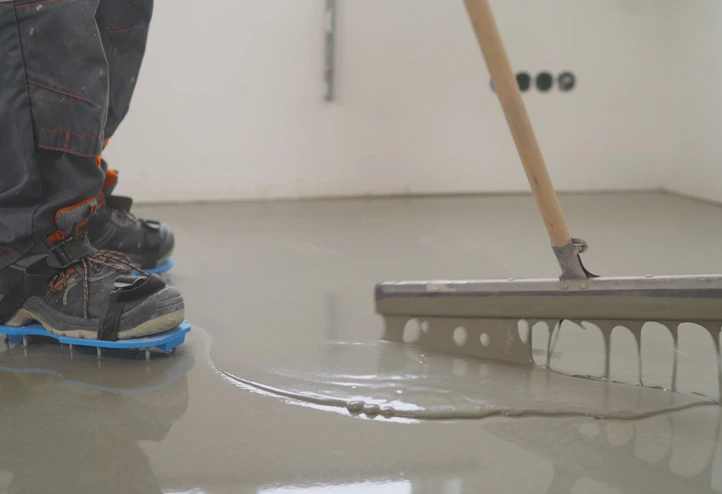
During mixing, the water ratio specified by the manufacturer must be strictly followed. While adding excess water might seem to ease the application at first, it leads to a loss of strength, cracking, and surface dusting in the later stages. Ambient temperature and weather conditions are also among the factors that directly impact application performance.
Key Points to Consider During Application:
- Ensuring the substrate is structurally sound
- Thorough dedusting of the surface
- Using the appropriate primer
- Strict adherence to the water-to-powder ratio
- Controlling the ambient temperature
- Setting the mixing time correctly
Technical Note: An incorrect water ratio severely degrades the performance of the application. Excess water reduces the strength of the product, which can lead to surface dusting or cracking in the long term.
What Happens If Self-Levelling Compound Is Not Used?
Flooring systems applied over inadequately prepared surfaces inevitably develop various structural failures over time. Issues like cracked ceramics, a hollow sensation beneath parquets, bubbling in PVC floor coverings, and imperfections on epoxy floors are mostly rooted in subfloor deficiencies. Air gaps formed underneath a floor covering cause both acoustic issues and adhesion failures.
Particularly in large-format tile installations, even millimeter-level imperfections in the floor can transform into severe deformations over time. Therefore, the foundation of any high-quality flooring system always relies on a correctly prepared substrate.
Pro Tip: How premium a floor looks is rarely determined by the final top floor covering material; it is dictated by the quality of the underlying subfloor. Even the most expensive ceramic tile will look flawed on an uneven floor.
The Importance of Self-Levelling Compound in Underfloor Heating Systems
Homogeneous heat transfer is vital in underfloor heating systems. Self-levelling compounds:
- Distribute heat more evenly across the surface,
- Prevent voids forming around heating elements,
- Reduce the occurrence of air pockets beneath the floor covering,
- Maximize energy efficiency.
Why Thickness Matters in Self-Levelling Compounds
Every self-levelling compound has a different recommended application thickness. Selecting the wrong thickness can result in cracking or structural performance failure.
- Thin-layer applications: Primarily used for fine surface smoothing and levelling.
- Thick-layer applications: Preferred for correcting significant elevation differences, surface renewal and rehabilitation of old floors.
The Future of Flooring Technology: Smart Compound Systems
The construction chemicals sector is continuously evolving. Today, self levelling compounds are being developed to be;
- Faster drying,
- Lower in emissions,
- More eco-friendly,
- Higher in compressive and flexural strength.
To get detailed information and receive a commercial offer, you can contact us via +44(0)2081760680 or info@fixaco.uk
Frequently Asked Questions
-
What is the difference between a self-levelling compound and a traditional compound?
Traditional compounds require intensive manual labor and trowel levelling, whereas self-levelling compounds flow automatically to create a much smoother, flatter surface with minimal effort.
- How many mm thick should self-levelling compound be applied?
Depending on the specific product formulation, it can generally be applied in ranges from 2-10 mm up to 20-100 mm.
-
How long after applying self-levelling compound can the floor covering be installed?
Although it varies based on the product type, floor coverings can be installed within 24 hours when using fast-drying systems.
-
Do self-levelling compounds crack?
When applied correctly, the risk of cracking is extremely low. However, improper water-to-powder ratios or applying without a primer can lead to cracks. Structural joints in the substrate should be mirrored through to the final floor covering.
-
Can self-levelling compounds be used with underfloor heating systems?
Yes. In fact, it is highly recommended due to its superior heat transfer and thermal conductivity performance.
-
Are self-levelling compounds waterproof?
Cement-based systems are highly water-resistant, but additional waterproofing membranes are recommended for surfaces exposed to continuous water contact.
-
Can self-levelling compounds be applied over old ceramic tiles?
Yes, it is possible with specific systems, provided that the correct specialized primer and surface preparation steps are followed.
-
What causes dusting on self-levelling compounds?
Dusting is generally caused by adding excess water during mixing or due to incorrect environmental conditions during application.
-
Can self-levelling compounds be used outdoors?
Most standard self-levelling compounds are designed for indoor use. Special exterior-grade formulas must be selected for outdoor applications.
-
Can self-levelling compounds replace ceramic tile adhesive?
No. It is purely used for surface preparation and levelling; it does not function as an adhesive.
-
Is priming mandatory before self-levelling compound application?
Yes. Primer is essential to enhance adhesion bond strength and seal substrate porosity to prevent air bubbles. Special primers may also be required if the moisture content of the concrete or sand cement screed substrate is too high. These primers, often referred to as surface damp proof membranes, reduce moisture vapor flow from the substrate, protect the final floor covering from high moisture levels and expediate earlier completion of the project than would otherwise be possible. Overlaying of these surface damp proof membranes should be carried out in accordance with the manufacturers recommendations as overlay windows often apply.
-
How many days does it take for self-levelling compound to reach full strength?
While it varies by product, full technical performance and ultimate curing strength are generally achieved between 7 and 28 days.
-
Is the application of self-levelling compounds expensive?
Although the initial material investment cost appears higher than traditional compound, it provides major cost advantages in the long run due to labor saving and coating longevity.
-
Why are self-levelling compounds preferred in professional projects?
They are preferred because they offer unmatched surface regularity, rapid application speed, superior quality standards and long-lasting coating performance.
Share!
Other Blog Posts
Other Blog Posts
Bitumen is one of the most important binding materials used […]
In modern structures, durability is becoming just as vital as […]
Modern bathroom design has shifted significantly toward high-end wet rooms […]
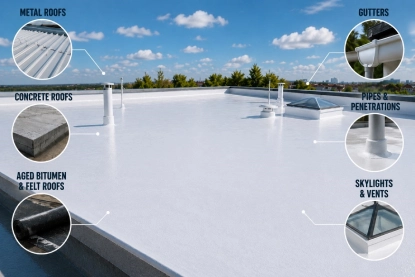
In the modern construction landscape, the demand for high-performance waterproofing […]
The window perimeter is one of the most technically demanding […]
Choosing the right waterproofing system for a flat roof is […]
Flat roofs are a critical component of modern building design, […]
Epoxy-based reinforcement systems, when used in combination with carbon or […]

Digital transformation is a process in which companies respond to […]
